
Burning through reciprocating saw blades faster than you should? Before you blame the blade, take a look at your saw’s adjustable shoe.
Many contractors, plumbers, electricians, demolition crews, and maintenance pros use their reciprocating saws with the shoe set in the same position every time — usually all the way back. It works, but it can cause one small section of blade teeth to do nearly all the cutting.
Your Shoe Is Adjustable
The shoe — the metal base at the front of the reciprocating saw that rests against the workpiece — can slide forward and backward on most saws.
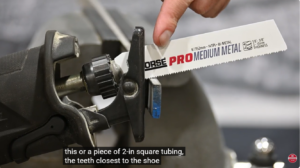
That adjustment changes which teeth contact the material during the cutting stroke. Yet it is often overlooked on the job site.
If you are cutting 1/4-inch flat bar, conduit, threaded rod, pipe, or 2-inch square tubing with the shoe left in one position, the teeth closest to the shoe repeatedly take the most abuse. Eventually, that small group of teeth wears down, slows your cut, and makes the blade feel finished — even though much of the blade may still have sharp, usable teeth.
Use Fresh Teeth Instead
When the teeth near the shoe start to dull, do not immediately throw away the blade.
- Remove the battery or unplug the saw.
- Release and slide the shoe forward.
- Reposition the blade so a fresh section of teeth engages the material.
- Continue cutting with unused teeth farther down the blade.
That simple adjustment spreads wear across more of the blade instead of concentrating it in one spot.
Why It Matters On the Job
Adjusting the shoe can help you:
- Extend usable blade life.
- Maintain faster, cleaner cuts.
- Reduce blade changes during a job.
- Get more value from every reciprocating saw blade.
- Keep a fresh cutting edge available for tough materials.
For example, when cutting a piece of 2-inch square tubing, it is easy to repeatedly wear out the same teeth near the blade’s base. Moving the shoe allows you to shift the cutting zone and put a new part of the blade to work — without opening another package.
A Small Habit With Big Payoff
Your reciprocating saw shoe is more than a stabilizer. It is a blade-life tool.
Before tossing a blade that seems worn out, inspect the full tooth line. If only one section is dull, adjust the shoe and use the fresh teeth already built into the blade.
Simple adjustment. Longer blade life. Better cutting performance.